
Your cart
There are no more items in your cart
- Dr.ssa Marina Putzolu
- 2 likes
- 26288 views
- 0 comments
Sweeteners , better known as sweeteners, are substances that are added to foods to make them more pleasant to the taste , as they provide a sweet aroma without increasing the calorie intake.
The growing prevalence of obesity and diabetes mellitus and problems related to an increase in blood sugar have led to an increase in the production and consumption of these substances which have a good sweetening power in breakfast foods, and not only such as: sweets, cereals , biscuits, jams, candies, chewing gum, various types of drinks and medications including some food supplements.
But for those suffering from lactose intolerance , the intestine is the first organ to pay attention to, and therefore we try to understand if these substances have a negative effect on their health.

What are sweeteners?
Sweeteners are divided into two categories: natural and synthetic ones.
Surely someone will have used it for example to sweeten coffee, such as the sweetener stevia rebaudiana.
Natural sweeteners are so called as they are found naturally in fruit and vegetables (even if those used industrially, are obtained from corn).
The most common are:
|  |
Easily recognizable in the list of ingredients, as they end with the suffix "ol". The most famous natural sweetener is probably xylitol. They do not experience side effects, although when consumed in large quantities, they can cause flatulence, stomach ache and dysentery and symptoms similar to the gastrointestinal reaction to beans and some foods rich in fiber.
These symptoms depend on an individual's sensitivity and other foods consumed at the same time.
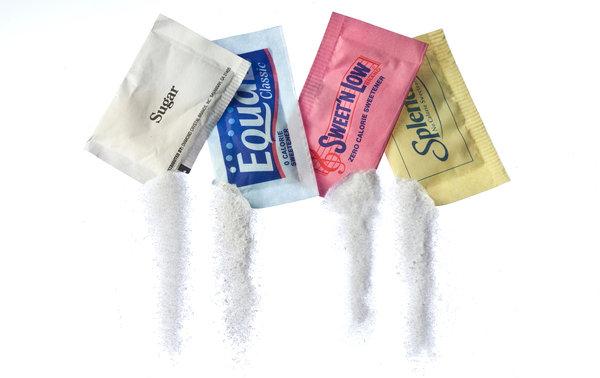
Artificial sweeteners are synthetic, i.e. produced in the laboratory. They are chemicals added to some food and industrial preparations. The most common are:
|  |
Is there a contraindication for our intestine?
Some scientific studies have shown how long-term consumption of artificial sweeteners can disrupt the balance and diversity of the gut microbiome in both mice and humans, decreasing the number of beneficial bacteria such as lactobacilli and bifidus .
For example, significant dysbiosis of the gut microbiome has been reported after feeding rats with saccharin, sucralose, aspartame and acesulfame K. This would mean that in sensitive subjects it could lead to a non-positive action on intestinal health .
Gut microbial communities play a significant role in human health and disease; in fact, the intestinal microbiome is involved in the metabolism, immunity, growth and fermentation of undigested carbohydrates.
More importantly, the gut microbiota cooperates with the immune system, providing signals to promote the maturation of immune cells and induce susceptibility to many pathophysiological conditions.
The composition and function of the microbiome are modulated and can be quickly altered by the wrong diet.
The mechanisms by which artificial sweeteners can affect the gut microbiome have not been clearly understood but may be related to their metabolites.
The metabolism of aspartame produces methanol and small amounts (~ 1.5%) of aspartyl phenylalanine diketopiperazine (DKP), both of which appear to have antimicrobial properties and can affect the gut microbiota.
It has also been suggested that sucralose could be metabolized to 1,6-dichloro-1,6-didexyfructose (1,6-DCF) or other aldehydes in the gut. These metabolites can adversely affect various biological processes in bacterial and mammalian cells.
Furthermore, it seems that their consumption may affect the intestinal microflora of some individuals more than others, possibly due to individual differences in genetic and microbiomal composition, or related to dietary habits, or medications taken, and so on.

In conclusion, consumers should simply be aware of the potential side effects of artificial sweeteners , even if there is no conclusive clinical data on such adverse effects.
At first glance it is difficult to understand if a sweetener is natural or not , you have to investigate and read carefully what is reported in the packaging . This does not only apply to the sachets of the bar to make our beloved coffee sweet ... we must in fact pay attention to the information on the labels of all the foods we ingest.
Medicines or food supplements may also contain sweeteners to sweeten the bitter taste of chemical compositions (to find out which lactase supplements have sweeteners click HERE ).
So, at the moment, we can only recommend a limited use of sweeteners.
Bibliography
- Ebrahimzadeh (2018) "A review of the health hazards of artificial sweeteners: are they safe?" Progress in Nutrition 2018; Vol. 20, Supplement 2: 36-43
- Nettleton JE, Reimer RA, Shearer J. (2016) "Reshaping the gut microbiota: Impact of low calorie sweeteners and the link to insulin resistance?" Physiol Beha.
- Shreiner AB, Kao JY, Young VB. (2015) "The gut microbiome in health and in disease". Curr Opin Gastroenterol
- Parekh PJ, Balart LA, Johnson DA. (2015) "The influence of the gut microbiome on obesity, metabolic syndrome and gastrointestinal disease". Clin Transl Gastroenterol
- Palmnäs et al. (2014) "Low-dose aspartame consumption differentially affects gut microbiota- host metabolic interactions in the diet-induced obese rat". PLoS ONE
- Haro et al (2016) “The gut microbial community in metabolic syndrome patients is modified by diet” J Nutr Biochem.
- David LA (2014) "Diet rapidly and reproducibly alters the human gut microbiome." Nature
- Suez J et al (2014) "Artificial sweeteners induce glucose intolerance by altering the gut microbiota." Nature

Comments (0)